JAX TAX FACTS Try the budget

Amendment 3 would sharply reduce city services, including parks, libraries, roads, and drainage.It could also slow response times for police and fire.

And Amendment 3 moves decision making about our community to Tallahassee.

Sheriffs, Fire Chiefs, Mayors, the Attorney General, and Tax Watchdogs Are Raising Serious Concerns About Amendment 3.

  • “The Florida Sheriffs Association is significantly concerned with Constitutional Amendment 3, which potentially allows Tallahassee to control your local budgets, creates longer law enforcement response times, limits communities’ abilities to provide road repairs and stormwater removal. These are a few things voters deserve to be aware of.”

    Florida Sheriffs Association
    Statement, August 3, 2026
  • “We oppose the current Amendment 3 because it creates far too much uncertainty about how local governments would continue to fund law enforcement, fire rescue, emergency medical services, and other critical public safety functions. Public safety should never become collateral damage with uncertain fiscal consequences.”

    Jeff Stinson, President
    Florida State Fraternal Order of Police · late July 2026
  • “Tax relief and reliable emergency services are not mutually exclusive, but both require responsible long-term planning. As currently proposed, Constitutional Amendment No. 3 creates substantial uncertainty regarding the future funding of fire protection, emergency medical services, and disaster response without identifying a sustainable replacement revenue source.”

    Florida Fire Chiefs’ Association
    Board statement, July 2026
  • “It’s a train wreck. So tell your legislators to go back to work next session and give you meaningful, appropriate, well-thought-out, well-managed, well-researched tax relief.”

    Sheriff Grady Judd
    Polk County · News 6 / WKMG, August 4, 2026
  • “This proposed reduction will inevitably result in roads deteriorating, libraries, pools, and parks closing, public safety response times going up, housing affordability worsening, and more homeless on our streets.”

    Mayor Donna Deegan
    City of Jacksonville · News4JAX, June 4, 2026
  • “The amendment could certainly have been rolled out with greater transparency and the meaningful involvement of key stakeholders, including our law enforcement agencies. No one wants to defund our incredible sheriffs, yet there were no discussions to involve them in this process.”

    James Uthmeier
    Attorney General of Florida · Florida’s Voice, August 10, 2026
  • “Florida TaxWatch finds that the hurried evaluation and adoption of what could be by far the largest change to the fiscal structure of Florida government in our state’s history was unwise and unnecessary.”

    Florida TaxWatch
    2026 Legislative Session Wrap-Up, July 6, 2026
1 / 7
Our analysis
Estimated annual city revenue loss Once fully phased in, 2028

Jacksonville City Auditors estimate a $300 million annual recurring loss taken out of the roughly $2 billion the city spends each year on the Sheriff’s Office, Fire-Rescue, parks, libraries, public works and neighborhood services.1

What that money pays for today$2.03B
Public safety, $1.07B
Quality of life, $450M
Debt, pension and obligations, $503M

Public safety, about $1.07B

The Sheriff’s Office and Fire-Rescue. More than half of what the city spends, and equal to 83% of all property tax revenue.

Quality of life, about $450M

Public works, parks, libraries, neighborhoods, planning and economic development, plus health, housing, homelessness and youth programs.

Debt, pension and obligations, about $503M

Debt service, unfunded pension obligations, and interlocal agreements with Baldwin and the Beaches. Fixed by contract.

Jacksonville is already under-funded, and this would make it worse.

Jacksonville already invests about half as much per resident as its peer cities.2 A cut this large is not the kind of thing a city absorbs by trimming waste. It is a cut that takes away the services residents rely on.

What Your Property Taxes Pay For
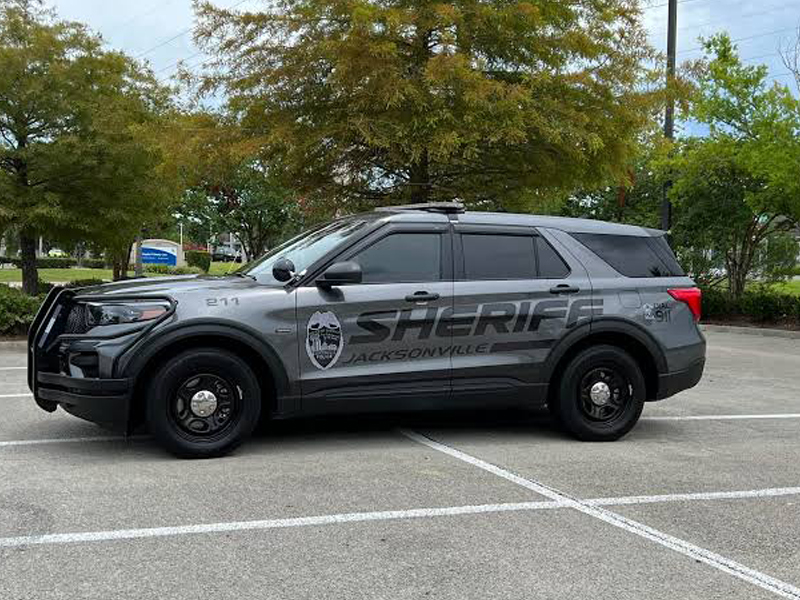
JSO Sheriff's Office
Sheriff's Office
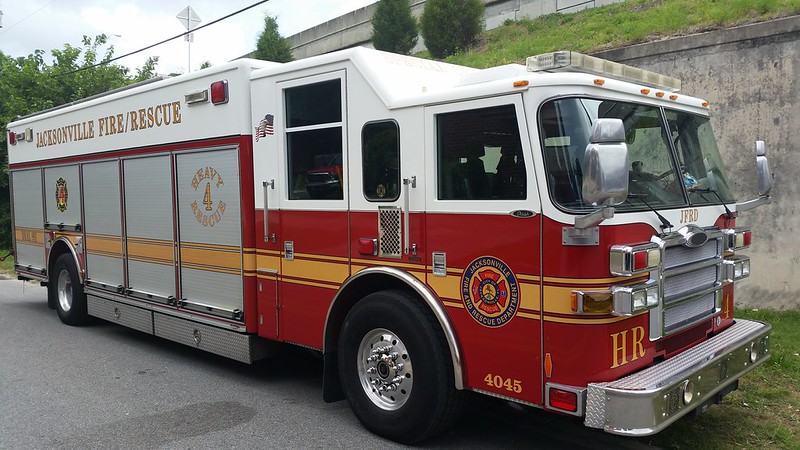
Fire crews working ladder trucks at a large building fire in downtown Jacksonville at night
Fire Rescue
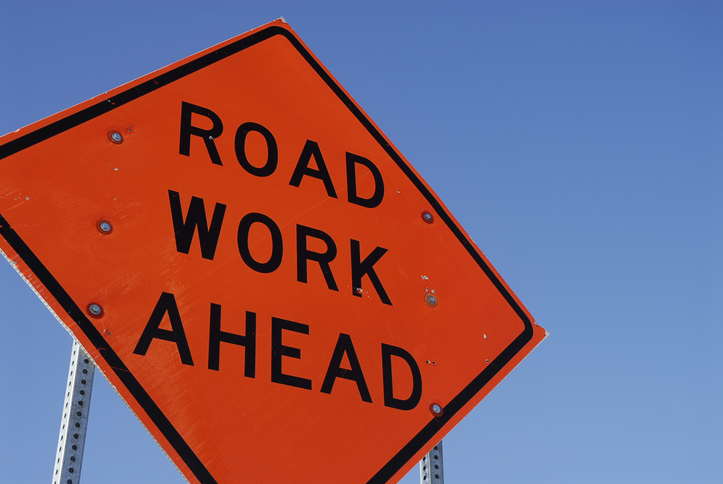
Road crew repairing pavement on a city street
Road Repair
Children playing at a riverfront park playground
Parks
Children's reading area inside a public library branch
Public Libraries
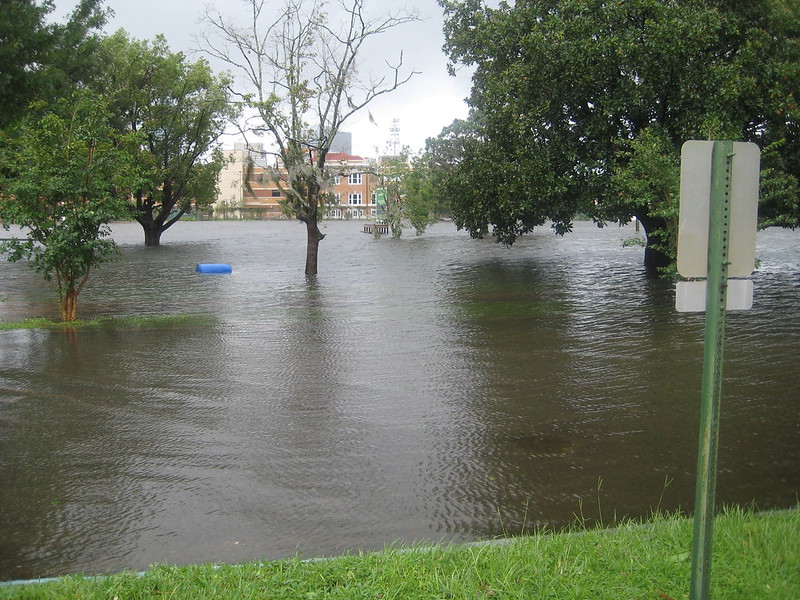
A riverfront park submerged by storm water
Storm Water Management
Questions

Questions people are asking

What does Amendment 3 actually do?

Four changes to how property is taxed in Florida:

  • Raises the homestead exemption on non-school taxes from $50,000 today to $150,000 in 2027 and $250,000 in 2028. Most of the revenue loss comes from here, and it is permanent rather than a one-year dip the city can ride out.
  • Requires new residents to wait five years before qualifying for the higher exemption. Two neighbors in identical houses can owe very different amounts based only on how long they have lived in Florida.
  • Lowers the non-homestead assessment cap on rental and commercial property from 10% to 5% a year. The non-homestead assessment cap limits how much the assessed value of non-homestead properties can increase each year for property tax purposes.
  • Needs 60% voter approval in November 2026. If it passes it is written into the state constitution. Jacksonville cannot opt out, and undoing it takes another statewide vote.

See note 3.

If passed, would Amendment 3 allow the local government to increase fees or taxes to offset the loss in property taxes?

Yes. Amendment 3 does not limit your local government’s ability to increase taxes or fees for things like parks, libraries, wastewater, and impact fees to make up for lost property tax revenue.

Would the loss of property tax revenue shift the cost burden to renters and small businesses?

It is likely. According to the Tax Foundation, eliminating such a significant share of Florida’s property tax base would not lower the cost of running local services. It would simply require that the lost revenue be raised somewhere else, including through higher property tax rates on everything that stays taxable. The Florida Policy Institute has made a similar point about rental and commercial property: if those owners pay more, they would have to decide whether to absorb the cost or shift it onto renters and consumers.

See note 5.

Will the state make up the lost revenue?

Nothing in Amendment 3 provides for it. The enrolled joint resolution contains no reimbursement, backfill, trust fund or offset for local revenue losses, for any county, and the implementing bill appropriates nothing.

A future Legislature could choose to appropriate something. Nothing obligates it to, and the proposals floated so far are aimed at rural counties rather than urban ones.

See note 4.

Can’t the city just find the savings in waste?

Jacksonville already invests about half as much per resident as its peer cities.2 A reduction of this size is not the scale of thing that gets absorbed by trimming inefficiency. It is the scale of thing that removes services.

Notes and sources

  1. The city budget figures. Figures are the City of Jacksonville’s proposed General Fund budget for fiscal year 2026–27, using the city’s own categories: a $2,026,502,015 total, of which public safety is $1,073,743,908 (53%), quality of life is $449,871,234 (22%), and debt, pension and other obligations are $502,886,873 (25%). Quality of life combines the city’s Direct City Services ($301,600,179) and People Investments ($148,271,055) categories. The General Fund is the account the city uses for day-to-day services such as police, fire rescue, parks, libraries and public works. It is not the city’s full consolidated budget, which also covers independent authorities and capital projects. Amendment 3 draws from the General Fund. The budget tool on this site breaks the quality-of-life total into individual departments and programs taken from the city’s schedule of expenditures; those line items sum to about $451.5 million, a difference of roughly $1.7 million from the city’s own category total, because a small number of departments are grouped differently in the two documents. Sources: City of Jacksonville, FY26–27 Budget Highlights, and the FY26–27 Proposed Annual Budget, General Fund Operating schedule of expenditures. This budget was proposed on July 20, 2026 and is not yet adopted; the City Council vote is scheduled for September 22, 2026, and the Council Finance Committee reduced the proposal by $22.9 million on August 28, 2026. The revenue-loss estimate reflects the exemption increase and the assessment-cap change applied to Duval County parcel data.
  2. Per-resident spending. 2023 Comparative Public Finance Analysis: Jacksonville Compared to Tampa, Orlando, Charlotte, Nashville, Indianapolis, Birmingham and Charleston, Mary O. Borg, Ph.D. and J. Rody Borg, Ph.D., September 2025, using 2023 audited financial reports. Published by the Jacksonville Civic Council.
  3. Homestead exemption. The increased exemption applies to non-school property taxes only. School district taxes are unaffected.
  4. State funding for local governments. Enrolled and filed texts of CS/HJR 1-F, 2026 Special Session; CS/SB 4F; Florida Statutes ss. 218.12, 218.125, 218.136 and 218.67; Office of Economic and Demographic Research distribution schedule for fiscal year 2025–26.
  5. Cost shift to renters and businesses. Nicole Fox and Katherine Loughead, The Real November Ballot Question: What Price Are Floridians Willing to Pay to “Save Their Homes?”, Tax Foundation, June 3, 2026. Esteban Leonardo Santis, Ph.D., Amendment 3: Property Tax Ballot Language Summary and Local Fiscal Impacts, Florida Policy Institute, July 21, 2026.

Want to check the arithmetic yourself?

Closing a gap this size is a series of choices. The budget tool lets you try making them.

Try the budget

Jax Tax Facts is for Public education purposes only, it is not legal, tax or financial advice.